Father's Day Embroidery: A Designer’s Stitch Review
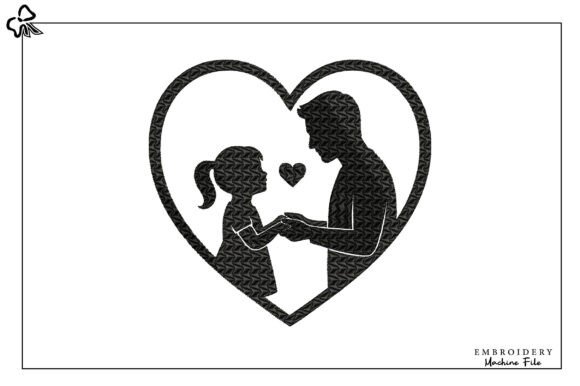
As an embroidery designer and product reviewer, I approach every new machine embroidery design with a critical eye. It is not enough for a graphic to look beautiful on a screen; it must translate into thread, tension, and texture. When evaluating this specific Father's Day Embroidery featuring a father and daughter silhouette inside a heart, my primary focus is on its viability for real-world production. This isn't just about sentimentality; it is about whether this design can withstand the rigors of commercial embroidery while delivering the emotional impact that customers expect from a personalized gift.
First Impressions: Silhouette Clarity and Emotional Weight
The immediate strength of this Father's Day Embroidery lies in its composition. Silhouettes are deceptively simple. In digital art, they are flat shapes, but in embroidery, they require precise edge definition to avoid looking like amorphous blobs. This design captures a special bond through clean lines, suggesting it relies heavily on well-defined satin stitch borders or tight fill stitch edges. For a crafter or Etsy seller, this visual clarity is paramount. When a customer orders a custom apparel item for Father S Day, they need to recognize the figures instantly from a distance. The heart shape acts as a natural frame, containing the narrative and making the design self-sufficient without needing excessive text or background clutter.
From a design asset perspective, this layout feels balanced. It avoids the common pitfall of top-heavy artwork that causes hooping issues. The centered gravity of the heart suggests stable stitching, which is a relief when working on stretchy fabrics or knits where distortion is a constant enemy. The mood is tender yet structured, making it appropriate for both baby embroidery projects and adult sweatshirt embroidery.
Real-World Application: Stitching the Tote Bag Test
To truly judge this embroidery file, I mentally placed it onto a canvas tote bag project intended for a boutique product line. Totes are unforgiving; the fabric texture is coarse, and the weave can swallow fine details. In this scenario, the Father's Day Embroidery performs admirably because of its bold use of negative space. If this were a highly detailed portrait with shading, the canvas grain would compete with the thread. However, the solid silhouette approach allows the thread colors to pop against the natural fabric texture.
During a simulated production run for a handmade product, I considered the stabilizer requirements. For a tote bag design of this nature, a medium-weight cutaway stabilizer is non-negotiable to prevent the heart shape from puckering. The design’s density appears manageable, meaning it won’t create a bulletproof patch effect that makes the bag stiff and unappealing. This balance is crucial for small shop products where tactile quality equals perceived value. Customers buying holiday embroidery items want something that feels artisanal, not industrial. The smooth transition between the father and daughter figures implies a digitizing style that prioritizes flow over unnecessary jumps, reducing trim time and increasing production efficiency for busy makers.
Navigating Fabric Limitations and Hoop Constraints
While versatile, this Father's Day Embroidery requires strategic placement depending on the substrate. Not all fabrics treat silhouettes equally. Here is where practical judgment comes into play:
- Stretchy Knits and Sweatshirts: The heart outline likely contains satin stitches. On fleece or jersey knits, these can tunnel if the underlay is insufficient. Always verify the stitch density and underlay type in your software before running this on expensive blanks. A water-soluble topping is essential here to keep the fabric texture from pushing through the stitches.
- Sheer or Lightweight Fabrics: If using this for baby clothes or lightweight tea towels, be cautious. Solid fill areas in a silhouette can be dense. On thin cotton voile or linen, this could cause tearing or warping. Test on scrap fabric first. You may need to switch to a lighter tear-away stabilizer or reduce the design size to lower the overall stitch count impact.
- Curved Surfaces like Caps: While the heart shape is compact, caps present unique challenges. Ensure the vertical height fits within your cap hoop size without hitting the brim seam. The curvature of a hat can distort circular shapes into ovals; check if the digitizer has compensated for this distortion.
- Dark vs. Light Fabrics: Silhouettes rely on contrast. On dark navy or black sweatshirts, ensure the thread colors provide enough luminance. A dark grey silhouette on a black shirt will disappear. This design works best when there is high contrast between the thread and the garment base.
Commercial Viability for Sellers and Makers
For Etsy sellers and creative entrepreneurs, the value of an embroidery project extends beyond the stitch-out. It encompasses the entire buyer journey, starting with the listing photos. This Father's Day Embroidery lends itself beautifully to printable mockups because of its distinct shape. Clean silhouettes are easier to visualize digitally than complex scenes, helping buyers understand exactly what they are purchasing. This reduces customer service inquiries and returns.
Furthermore, consider the licensing and commercial embroidery rights. Before listing finished products or selling the digital embroidery file itself, confirm the terms. Does the license allow for unlimited physical sales? Can you use the image in marketing materials? Professionalism means respecting intellectual property. For craft business owners, this design serves as a strong anchor for Father S Day collections, but it should be paired with complementary fonts or simpler accents to create a cohesive brand aesthetic rather than relying on a single standalone image.
Essential Pre-Stitch Checklist for Professionals
Experience teaches us that assumptions lead to ruined garments. Before committing this design to a final product, adhere to this practical workflow:
- Verify Specifications: Since exact stitch counts and dimensions vary by format, open the file in your machine or editing software first. Confirm the hoop size matches your equipment capabilities.
- Contrast Testing: Print a black and white version of the design. If the father and daughter blend together in grayscale, they may lack sufficient color separation in thread. Adjust thread colors if necessary to maintain definition.
- Stabilizer Match: Pair the stabilizer to the fabric, not just the design. Heavy denim needs different support than performance wear. Never skip the test stitch on the actual material you intend to use.
- Detail Inspection: Zoom in to 100% in your software. Check for tiny gaps between the heart border and the silhouette. Gaps that look fine on screen can become glaring errors in thread. Fix them digitally before stitching.
- Wash Test: If creating baby embroidery or kitchen linens, wash and dry the test sample. Silhouettes can shrink at different rates than the fabric. Ensuring the design survives laundering protects your reputation as a maker of quality goods.
Elevating the Finished Product
Ultimately, this Father's Day Embroidery succeeds because it understands the medium. It leverages the strengths of thread—sheen, texture, and dimensionality—without fighting against them. Whether you are creating an embroidered patch for a vest, personalizing a nursery pillow, or stocking your online store with seasonal goods, this design offers a reliable foundation. It bridges the gap between technical execution and emotional resonance. By treating this embroidery file with professional respect and testing rigorously, you transform a simple digital asset into a cherished keepsake that celebrates connection with integrity and craftsmanship.